2013/10/11
By Orla Guerin: Pakistani civilian victims vent anger over US drones:
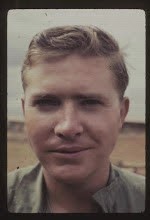
When tribal elders from the remote Pakistani region of North Waziristan travelled to Islamabad last week to protest against CIA drone strikes, a teenager called Tariq Khan was among them. A BBC team caught him on camera, sitting near the front of a tribal assembly, or jirga, listening carefully. Four days later the 16-year-old was dead, killed by one of the drones he was protesting against. In his final days, Tariq was living in fear, according to Neil Williams from the British legal charity, Reprieve, who met him at the Jirga. "He was really really petrified," said Mr. Williams from the British legal charity, Reprieve, who met him at the Jirga."He was really really petrified," said Mr Williams, "and so were his friends. He didn't want to go home because of the drones. They were all scared." Tariq carried with him the identity card of his teenage cousin, Asmar Ullah, who was killed by a drone. On Monday he shared his fate. Tariq's family say he was hit by two missiles as he was driving near Miranshah, the main town in North Waziristan. The shy teenager, who was good with computers, was decapitated in the strike. His 12-year-old cousin Wahid was killed alongside him. The boys were on their way to see a relative, according to Tariq's uncle, Noor Kalam, whom we reached by phone. He denied that Tariq had any link to militant groups. "We condemn this very strongly," he said. "He was just a normal boy who loved football." The CIA's drone campaign is a covert war, conducted in remote terrain, where the facts are often in dispute. The tribal belt is off limits to foreign journalists. Militants often seal off the locations where drone strikes take place. The truth can be buried with the dead. After the missile strike on Monday, Pakistani officials said four suspected militants had been killed. If the strike actually killed two young boys, as appears to be the case, it's unlikely anyone will ever be held to account. There are no confirmed death tolls but several independent organizations estimate that drones have killed more than 2,000 people since 2004. Most are suspected to be militants. Many senior commanders from the Taliban and al-Quada are among the dead. But campaigners claim there have been hundreds of civilian victims, whose stories are seldom told. A shy teenage boy called Saadullah is one of them. He survived a drone strike that killed three of his relatives, but he lost both legs, one eye and his hope for the future. "I wanted to be a doctor," he told me, but I can't walk to school anymore. When I see others going, I wish I could join them."Like Tariq, Saadullah travelled to Islamabad for last week's jirga. Seated alongside him was Haji Zardullah, a white-bearded man who said he lost four nephews in a separate attack. "None of these were harmful people," he said. "Two were still in school and one was in college." Asghar Khan, a tribal elder in a cream turban, said three of his relatives paid with their lives for visiting a sick neighbor. "My brother, my nephew and another relative were killed by a drone in 2008," he said. "They were sitting with this sick man when the attack took place. There were no Taliban." Legal challenges: Viewed from a drone, any adult male in the tribal areas can look like a target, according to Mirza Sgahzad Akbar, a Pakistani lawyer who is taking on the CIA.


By Stephen Lendman: US Globalized Torture Black Sites:
On October 5, US Delta Force commandos, CIA operatives, and FBI agents abducted Abu Anas al-Liby. Doing so highlights what's been out-of-control since 9/11. In the 1980s, al-Liby was one of many CIA-recruited mujahideen fighters. They were used against Afghanistan's Soviet occupiers. Ronald Reagan called them "the moral equivalent of our founding fathers." He characterized Contra killers the same way. Bin Laden, al-Liby, and many other Al Qaeda fighters were used strategically as both allies and enemies. Most recently, al-Liby was an anti-Gaddafi "freedom fighter". In 2000, he was indicted for his alleged role in bombing US Kenyan and Tanzanian embassies in 1998. He was one of the FBI's most wanted. He had a $5 million bounty on his head. US policy is out-of-control. Obama authorizes whatever he wants anywhere worldwide. Rogue leaders operate that way. On October 8, AP headlined "Did Obama Swap 'Black' Detention sites for ships?" He ordered alleged "terrorists for as long as it takes aboard US naval vessels." Al-Libi is held on the USS San Antonio. It's an amphibious warship. Throughout his tenure, Obama continued the worst of odious Bush administration practices. The Clinton administration began them. Guilt or innocence doesn't matter. Suspects are lawlessly abducted. They're denied all rights. They're held secretly at US black sites. Confessions are extracted through torture. Detainees say anything to stop pain. Guantanamo is the tip of the iceberg. Dozens of US torture prisons operate globally. Afghanistan, Egypt, Ethiopia, Jordan, Kenya, Libya, Saudi Arabia, Turkey and many other complicit US allies host them. They permit indefinite detention, interrogations, torture and other forms of abuse. They assist in capturing and transporting detainees. They allow use of their domestic airspace. They provide intelligence information. America is by far the world's leading human rights abuser. No nation in history matches its ruthlessness. It's out-of-control. It's unaccountable. It's waging war on humanity. It's waging war on humanity. It's doing it globally. Reprieve is UK-based. It works to "secure each person's right to a fair trial." It tries to "save lives." In June 2008, it said America "may have used as many as 17 ships as floating prisons." "About 26,000 people are being lawlessly held by the US in secret prisons, a figure that includes land-based detention centers." Information suggests up to 80,000 have been 'through the system' since 2001." So have thousands more under Obama. Former Pentagon spokesman Navy Commander Jeffrey Gordon lied earlier, saying: "We do not operate detention facilities on board Navy ships." They're in Iraq, Afghanistan and Guantanamo Bay." They're in at least 54 complicit countries. according to Reprieve: "prison ships have been used by the US to hold terror suspects illegally since the days of Clinton." "US government sources have confirmed that both the USS Bataan and the USS Peleliu have been used to hold prisoners." Reprieve investigations suggest that a further 15 ships have been used to hold prisoners beyond the rule of law since 2001."
By Harvey Wasserman: 1400 Hiroshimas still swing in the Fukushima air:
Japan's pro-nuclear Prime Minister has finally asked for global help at Fukushima. It probably hasn't hurt that more than 1,000,000 people have signed petitions calling for a global takeover; more than 8,000 have viewed a new YouTube on it. Massive quantities of heavily contaminated water are pouring into the Pacific Ocean, dousing workers along the way. Hundreds of huge, flimsy tanks are leaking untold tons of highly radioactive fluids. At Unit #4. more than 1300 fuel rods, with more than 400 tons of extremely radioactive material, containing potential cesium fallout comparable to 14,000 Hiroshima bombs, are stranded 100 feet in the air. All this more than 30 months after the 3/11/2011 earthquake/tsunami led to three melt-downs and at least four explosions. "Our country needs your knowledge and expertise" he has said to the world community. "We are wide open to receive the most advanced knowledge from overseas to contain the problem." But is he serious? "I am aware of three US companies with state of the art technology that have been to Japan repeatedly and have been rebuffed by the Japanese government," says Arnie Gunderson, a Vermont-based nuclear engineer focused on Fukushima. "I have spoken with six Japanese medical doctors who have said that they were told not to discuss radiation induced medical issues with their patients. None will speak out to the press. "Three American University professors were afraid to sign the UN petition to Ban Ki-Moon because it would endanger their Japanese colloquies who they are doing research with." Abe, he says, to paraphrase it politely, might not be entirely forthcoming. Fukushima Daiichi is less than 200 miles from Tokyo. Prevailing winds generally blow out to sea, directly towards the United States, where Fukushima's fallout was measured less than a week after the initial disaster. But radioactive hot spots have already been found in Tokyo. A worst-case cloud would eventually make Japan an uninhabitable waste-land. What it could do to the Pacific Ocean and the rest of us downwind approaches the unthinkable. "If you calculate the amount of cesium 137 in the pool" at Unit #4, "the amount is equivalent to 14,000 Hiroshima atomic bombs," says Hiroaki Koidi, assistant professor at the earthquake/tsunami. An International Atomic Energy Agency document says they were exposed to the open air, did catch fire and did release radiation. Since none of the six GE-designed Daiichi reactors has a containment over the fuel pools, that radiation poured directly into the atmosphere. Dozens more designed like these reactors operate in the US and around the world. Then corrosive sea water was dumped into the pool. Unit #4 was damaged in the quake, and by an explosion possibly caused by hydrogen leaking in from water flowing frown from the mountains, and from attempts to cool the cores missing from Units #1, #2 and #3. Tokyo Electric Power and the Japanese government may try to bring down the Unit #4 rods next month. With cranes operated by computers, that might normally take about 100 days. But this requires manual control. Tepco says they'll try to do it in a year, half their original estimate, presumably to beat the next earthquake.
2013/10/10
By Norman Solomon: "Endorsed Military Efforts in the Name of Peace".
Here comes the 2013 Nobel Peace Prize, Dragging a Broken Moral Compass. The announcement of this year's Nobel Peace Prize winner, set for October 11, is sure to make big news. The prize remains the most prestigious in the world. But the award has fallen into an evasive pattern, ignoring the USA's continuous "war on terror" and even giving it tacit support. In his 1895 will, the dynamite inventor and ammunition magnate Alfred Nobel specified that Norway's parliament should elect a five member committee for awarding the prize to "champions of peace." Yet the list of recent Nobel peace laureates is notably short on such champions. Instead, the erstwhile politicians on the Norwegian Nobel Committee have largely bypassed the original purpose of the prize. Despite all its claims of independence, the Oslo-based Nobel Committee is enmeshed in Norwegian politics. The global prestige of the Nobel Peace Prize has obscured the reality that its selection committee is chosen by leaders of Norway's main political parties, and, as a member of NATO, Norway is deeply entangled in the military alliance. When the Nobel Peace Prize went to President Obama in 2009, he was in the midst of drastically escalating the U.S. war effort in Afghanistan, in tandem with the rest of NATO. The same prize went to the European Union in 2012, a year after many of its member states intervened with military force in Libya. On both occasions, in effect, the Nobel Committee bestowed a "good war-making seal of approval." Since 2001, the Nobel Peace Prize has been on a prolonged detour around the U.S. government's far-flung warfare, declining to honor anyone who had challenged any of it anywhere in the world. But the Nobel Committee has done more than just ignore peace activism seeking to stop U.S. -led war efforts. By giving the Peace Prize to Obama and the E.U., the committee has implicitly endorsed those military efforts as part of a rhetorical process that conflates war-making with peace-making. Orwell's 1984 specter of "War Is Peace" looms uncomfortably large. At times, the Peace Prize has earned goodwill in NGO circles by honoring humanitarian work that is laudable but not directly related to peace. And so far in this century, when the Nobel Committee has focused the prize on human rights, it has danced around Uncle Sam's global
shadow. The Peace Prize has gone only to dissidents in countries where governments are in conflict with Washington, such as Shirin Ebadi of Iran in 2003 and Liu Xiaobo of China in 2010, while failing to honor any of the profuse activism against severe abuses by U.S. backed governments. It was not always this way. During previous decades, the annual announcement of the Nobel Peace Prize might alternately please or enrage the top leaders in the capital of a world power. In 1983, the awarding of the prize to Poland's Solidarity leader Lech Walesa infuriated the Kremlin. When the 1992 prize went to Rigoberta Menchu, an indigenous foe of U.S. supported tyrants killing Guatemalan civilians in large numbers, it was a much-needed rebuke to Washington.
shadow. The Peace Prize has gone only to dissidents in countries where governments are in conflict with Washington, such as Shirin Ebadi of Iran in 2003 and Liu Xiaobo of China in 2010, while failing to honor any of the profuse activism against severe abuses by U.S. backed governments. It was not always this way. During previous decades, the annual announcement of the Nobel Peace Prize might alternately please or enrage the top leaders in the capital of a world power. In 1983, the awarding of the prize to Poland's Solidarity leader Lech Walesa infuriated the Kremlin. When the 1992 prize went to Rigoberta Menchu, an indigenous foe of U.S. supported tyrants killing Guatemalan civilians in large numbers, it was a much-needed rebuke to Washington.
By Richard Escow: Republicans Discover Government, Promptly Convene 'Imperial Congress'
Picture a lone Republican running through the darkened hallways of power, paraphrasing Soylent Green's climactic line as he shouts the news to his peers: "It's people! The Federal government is people!" That insight seemed to strike Hill Republicans last week, if only briefly: Our government ids made up of people helping other people. But don't count on seeing as new era of conciliation or a new embrace of democratic processes. Instead Republicans seemed to renew their commitment to the principle that only one branch of government, their branch, should control it. Call it the Imperial Congress, and this week it tried to invent a new form of governance. Of the People, By the People: This could be a learning moment for any Republican willing to change. For years they've railed against a dark and faceless abstraction they call "Government." Now that they've shut down the government, not the faceless monster of their fantasies, but the real-life Constitutional version, they 've been forced to change their tune a little. Consider Rep. Randy Neugebauer's boorish rant to a Park Ranger, whom he lacerated because the shutdown had closed the park to most visitors. Neugebauer didn't tell the ranger or the crowd of onlookers that we didn't need parks, or that we could do without a government to run them. Instead he tried to place the blame for their closure on a single Federal employee. Suddenly the enemy was government shutdowns, not government. That's progress, in a way. But think of it: A Congressman who voted to shutdown the government, while continuing to receive $172,000 per year, dressed down a park ranger who had shown up for work not knowing when, or if she would be paid at all. (The average Park Ranger earns $44,900 per year.) Neugebauer, and others like him, have been indoctrinated with a far-right ideology which says that Federal employees should "get off our backs." But instead of facing a Randian parasite, Neugebauer was confronted with a human being trying to do a popular job under difficult circumstances. Deep down inside, his rage might have been thinly concealed shame. It certainly should have been. This embarrassing moment, and others like it, might have contributed to the GOP's decision late last week to agree that all furloughed workers will eventually receive back pay. They may have also discovered that Federal employees, like other citizens, vote. Neugebauer told the Park Ranger she should be "ashamed" for turning a line of people away from a national park site, even though Neugebauer's party has been orchestrating the shutdown for months, as reported in detail in today's New York Times. The Congressman confronted another reality that day: The government exists for people just like the ones standing in line with him. And since the people designed that government through their democratic institutions, it shouldn't be surprising that they generally like the things it does. Even conservatives who mouth anti-government rhetoric usually like going to parks and museums, or receiving Social Security checks.
By Norman Solomon: Here Comes the Nobel Peace Prize, Dragging a Broken Moral Compass!
The announcement of this year's Nobel Peace Prize winner, set for October 11, is sure to make big news. The prize remains the most prestigious in the world. But the award has fallen into an evasive pattern, ignoring the USA's continuous "war on terror" and even giving it tacit support. In his 1895 will, the dynamite inventor and ammunition magnate Alfred Nobel specified that Norway's parliament should elect a five-member committee for awarding the prize to "champions of peace." Yet the list of recent Nobel laureates is notably short on such champions. Instead, the erstwhile politicians on the Norwegian Nobel Committee have largely bypassed the original purpose of the prize. Despite all its claims of independence, the Oslo-based Nobel Committee is enmeshed in Norwegian politics. The global prestige of the Nobel Prize has obscured the reality that its selection committee is chosen by leaders of Norway's main political parties-and, as a member of NATO, Norway is deeply entangled in the military alliance. When the Nobel Peace Prize went to President Obama in 2009, he was in the midst of drastically escalating the U.S. war effort in Afghanistan, in tandem with the rest of NATO. The same prize went to the European Union in 2012, a year after many of its member states intervened with military force in Libya. On both occasions, in effect, the Nobel Committee bestowed a "good war-making seal of approval." Since 2001, the Nobel Peace Prize has been on a prolonged detour around the U.S. government's far flung warfare, declining to honor anyone who had challenged any of it anywhere in the world. But the Nobel Committee has done more than just ignore peace activism seeking to stop U.S. -led war efforts. By giving the Peace Prize to Obama and the E.U., the committee has implicitly endorsed those military efforts as part of a rhetorical process that conflates war-making with peace-making. Orwell's 1984 specter of "War Is Peace" looms uncomfortably large. At times, the Peace Prize has earned goodwill in NGO circles by honoring humanitarian work that is laudable but not directly related to peace. And so far in this century, when the Nobel Committee has focused the prize on human rights, it has danced around Uncle Sam's global shadow. The Peace Prize has gone only to dissidents in countries where governments are in conflict with Washington, such as Shirin Ebadi of Iran in 2003 and Liu Xiaobo of China in 2010, while failing to honor any of the profuse activism against severe abuses by U.S. -backed governments. It was not always this way. During previous decades, the annual announcement of the Nobel Peace Prize might alternately please or enrage the top leaders in the capital of a world power. In 1983, the awarding of the prize to Poland's Solidarity leader Lech Walesa infuriated the Kremlin. When the 1992 prize went to Poland's Solidarity leader Lech Walesa infuriated the Kremlin. When the 1992 prize went to Rigoberta Menchu, an indigenous foe of U.S. supported tyrants killing Guatemala civilians in large numbers, it was a much needed rebuke to Washington. Yes, some Peace Prize choices were dubious or worse. After an Orwellian one, the caustic songwriter Tom Lehrer commented: "Political satire became obsolete when Henry Kissinger was awarded the Nobel Peace ." In an exercise of absurd equivalency, the Nobel Committee had given the 1973 prize to Kissinger and North Vietnam's negotiator Le Duc Tho.
2013/10/09
By Bashar al Assad: President al-Assad Interview: "No Dialogue with Gunmen, All Decisions taken ny the West
for the past ten years have been in support of al-Qaeda" President Bashar al-Assad said that all the political decisions that have been in support of al-Qaeda, intentionally or inadvertently. In an interview with the German Der Spiegel News Magazine, President al Assad said that through Western support, now there are thousands of al-Qaeda fighters from 80 countries in Syria. Following is the full text of the interview: Der Spiegel: Mr. President, do you love your country? President Assad: Of course, and in this I am no different from most people. This is not merely about emotions, but rather about what one can do for his country if he has the power and especially in times of crisis, and at this particular time, I realize more than ever how much I love my country and so I must protect it. Der Spiegel: Wouldn't you be more patriotic if you stepped down and allowed for negotiations over an interim government or for a cease-fire with the armed opposition? President Assad: The Syrian people determine my fate: no other party can determine this issue. As for the armed opposition or fractions, who do they represent, the Syrian people? Is so, this can be proven only through the ballot box. Der Spiegel: Are you prepared to run in the next elections? President Assad: My term ends in August next year. The presidential elections should take place before that time. I cannot decide now whether I am going to run, this depends on what the Syrian people want. If people are not behind me, I won't stand in the elections. Der Spiegel: Will you seriously consider giving up power? President Assad: This is not about me or what I want. Its about what the people want. The country is not mine alone, it's the country for all Syrians. Der Spiegel: But some people say that you are the cause of the rebellion, because people want to get rid of corruption and tyranny. They call for true democracy, and according to the opposition, this is not possible with you in power. President Assad: Do these people speak for themselves, or do they speak on behalf of the Syrian people or on behalf of the countries that are backing them? Do they speak on behalf of the United States, the United Kingdom, France, Saudi Arabia or Quatar? Let me be clear about this: this conflict is being brought to our country from the outside world. These people live in five-star hotels, they are dictated to by their financial backers and have no grass roots in Syria. Der Spiegel: Do you deny that there is a strong opposition against you in your country? President Assad: There is certainly an opposition in our country. What country doesn't have opposition? It's impossible for all the Syrians to be on my side. Obama has no right to tell the Syrian people whom to choose as their president. Der Spiegel: But some people say that you are the cause of the rebellion, because people want to get rid of corruption and tyranny. They call for a true democracy, and according to the opposition, this is not possible with you in power. President Assad: Do these people speak for themselves, or do they speak on behalf of the Syrian people or on behalf of the countries that are backing them? Do they speak on behalf of the United States, the United Kingdom, France, Saudi Arabia or Quatar? Let me be clear about this: this conflict is being brought to our country from the outside world. These people live in five-star hotels, they are dictated to by their financial backers and have no grass roots in Syria.
Subscribe to:
Posts (Atom)